Project and Consultancy
Design & Consultancy
Engineering design processes in mechanical and electrical systems, structured based on execution experience, technical accuracy, system performance, and operational requirements.
Design decisions are shaped through the combined evaluation of site conditions, installation requirements, and operational needs.
This approach enhances constructability on site and enables predictable system performance.
Engineering Approach
Field data and installation requirements derived from execution experience are considered as key inputs to the design process.
System configurations are developed through the integration of discipline coordination and technical requirements.
This structure ensures that design decisions are effectively implemented on site and that continuity is maintained throughout the execution phase.
Scope
- Heating, Ventilation, and Air Conditioning (HVAC) Systems
- Fire Protection and Fire Detection Systems
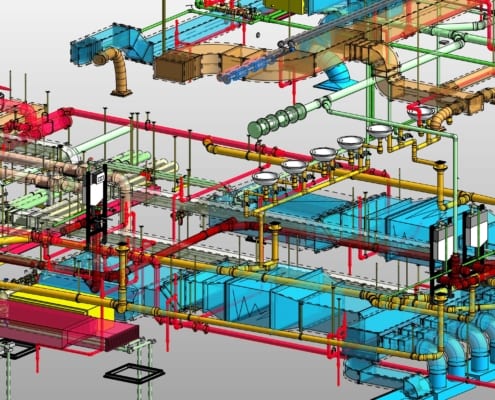
- 3D Revit MEP Design (HVAC, Fire Protection)
- CFD Analysis using ANSYS
- Tier III & Tier IV Data Center Documentation
- EN 50600 Data Center Compliance Documentation
- Plumbing, Water Treatment, and Pool Systems
- Natural Gas, Chemical Gas, Compressed Air, and Steam Systems
- Mechanical Automation and Building Management Systems (BMS)
- Renewable Energy Systems
- Hygienic Area System Design
- Low Voltage (LV) and Medium Voltage (MV) Electrical Systems
- Power Distribution and Backup Power Systems
- Low Current Systems
Data Centers, Industrial and Mission-Critical Systems
Engineering and execution experience in data centers, industrial facilities, and systems requiring continuous operation and high redundancy.
Design decisions in these projects are developed in line with continuity, redundancy, and operational reliability requirements.
Engineering solutions supported by CFD analysis enable the prediction and validation of system performance.
Project Lifecycle Coverage
Engineering services covering the design, execution, and operation phases of MEP systems.
Design and consultancy services can be delivered independently based on project requirements or integrated with other disciplines when required.
This structure ensures alignment between design decisions, site execution, and long-term system performance.